2011 Land Rover DC100 Sport Concept


Land Rover DC100 and DC100 Sport concepts - two modern interpretations of the iconic Land Rover made their debut at the 2011 Frankfurt Motor Show. Both concepts capture the adventurous, daring, indomitable spirit of Land Rover. This spirit was established in 1948 by the Series 1, the first mass-produced civilian 4x4, which swiftly earned a global reputation for itself, for British engineering and for the Land Rover name.

Design

The Land Rover DC100 and DC100 Sport concepts preview a potential future direction for Land Rover. There is no doubt these concepts demonstrate that this world-famous and well-loved brand is firmly focused on the future, and is one that recognises its heritage but does not allow it to impede innovation.

The four key elements of Land Rover Design are again evident, but with a different tonality:
Functionality - a fresh approach demonstrated through the harmony of design and capability, as well as modularity and clever features such as flexible seating and novel stowage solutions.
Sustainability - with the use of lightweight and recycled materials and also a long-life ethos that ensures engineering as well as design longevity.
Premium Durability - achieved through attention to detail, 'fit for purpose' design solutions, material choices and engineering integrity.
Desirability - born out of the knowledge that these vehicles will deliver an ownership experience beyond all your expectations.
2011 Land Rover DC100 Sport Concept


Every Land Rover design starts with great proportions, and these concepts are no exception. Short front and rear overhangs, four-square stance, Command driving position and superb ground clearance are fundamental design elements that give these vehicles their unique character and capability. The exterior surface language is all about simplicity and strength, with a strong shoulder running the full length of the vehicle and defining the corners.

The interiors have been developed to have a uniquely Land Rover feel. A sense of open space is created by the low centre console and the strong chamfers on the instrument panel elegantly integrating into the A-pillar structure. The design has an inherent flexibility; for example the central instruments can be removed from the vehicle and used outside for continued 'on foot' navigation or to capture remote explorations on film, through inbuilt cameras.

All these features are common to both DC100 and DC100 Sport. The former is the epitome of tough durability whilst the latter then takes this philosophy and extends it into new territory. This exciting combination of go anywhere capability and adaptability results in concepts fit for all lifestyle choices.

Replacing a true automotive icon, these two concepts are intended to explore the potential future design language that takes the open and honest character and timeless simplicity of the original and updates them for the 21st Century.

Technology

The concepts are based on the same advanced mixed-alloy underpinnings - with a 100-inch wheelbase - and represent the flexibility of design and use inherent in this very capable platform. An eight-speed transmission with integrated Intelligent Stop/Start and a transfer case provides a wide spread of high and low ratios for on and off-road driving.

Also showcased is the next generation of Land Rover's world-leading, all-terrain technology. Building on the acclaimed Terrain Response system, these will work seamlessly together to reduce the workload on the driver by identifying potential hazards and advising on safe routes to avoid them. An advanced telematics programme unites the systems and allows vehicle to smartphone communication.

Design

Land Rover has a design integrity that stretches back more than 60 years. Reinventing and reinvigorating that design ethos is a challenge that has been met - in very different ways - by the two concepts, each of which represents different points on the Land Rover spectrum.

Simplicity and Strength

The bodywork below the waist reflects the Land Rover practice of avoiding extraneous detailing by following the principle of design working in harmony with function, leading to a purposeful simplicity of surface. The sharply defined shoulder line and near vertical panels of the concepts place all four corners within sight of the driver, to create Land Rover's hallmark confidence-inspiring Command driving position.

Compact dimensions, short overhangs and 22-inch alloy wheels lend both all-terrain concepts a fittingly purposeful, four-square stance. Further detailing common to both concepts - such as the triangular vent in the front wings, the bonnet edges set into the shoulder line and the prominent handle set into the trailing edge of the doors - also reference existing Land Rovers.

Dependable Design

There is arguably no other car in the world that inspires such loyalty and affection as a Land Rover, from the original Series 1 to today's Defender. Crucial to that appeal is the front-end design and DC100 Sport and DC100 represent the latest evolution of the Defender 'face' that has retained its timeless appeal for 60 years.

The key elements were a sense of openness and honesty; as a vehicle used in the most extreme conditions, a Land Rover must exude dependability. This is seen to greatest effect in DC100 with its signature twin round headlamps and purposeful grille. DC100 Sport represents a more assertive, performance-oriented interpretation of this classic Land Rover look.

DC100

The radically different design treatments above the waist demonstrate the modularity and flexibility of the platform. The shape of DC100 is instantly recognisable to generations and, like the original Land Rover and the Defender that followed it, looks equally at home alongside an English village green as traversing an Icelandic lava field.

As a dependable all-terrain workhorse, DC100 firmly emphasises the practical side of Land Rover. The upright windscreen provides excellent visibility on and off-road while the interchangeable rear cover allows for either maximum cargo capacity or transporting additional passengers. A winch, capable of supporting the weight of the car, is neatly integrated into the front grille and towing eyes have been built into each corner of the concept.

As a further extension of its capabilities, the DC100 roof is equipped with solar panels to power on-board systems, reducing the load on the engine and lowering emissions. The DC100 exterior is painted in soft metallic silver specifically intended to reflect the sun's rays, keeping the interior cool in hot climates and reducing the demands on the climate-control system.

DC100 Sport

With DC100 Sport, Land Rover has created a unique concept that occupies its own territory. It takes its cue from the early canvas-roofed Defenders with their fold-down windscreens that still typify the Land Rover spirit of adventure and exploration.

Reimagined as a performance concept for the 21st century, it features a wrap-around aero screen and cut-down side windows for exhilarating open-air motoring. Flowing back from the seats is a twin-humped fastback roofline that encloses a generous load bed that includes fittings designed to secure extreme sports equipment.

The DC100 Sport is finished in an exhilarating metallic amber that echoes the vibrant ochre hues found in Africa; eye-catching whether exploring mountain tracks, breezing along a beach or cruising through town.

Interior

Functionality and usability are two key characteristics of Land Rover interiors - the position and logic of every control should be obvious the moment the driver enters. The concepts take this premise and address it in a truly contemporary way.

The form and function of the concepts are visually integrated in the interior layout; the door structure flows into the cabin before forming an elegant beam running the width of the dash. This means that the concepts can recreate the Series 1 three-abreast seating layout.

Social Seating

This seating arrangement, as well as creating a more social vehicle, extends its versatility. The passenger seat can be folded out of the way to increase carrying capacity. The middle seat conceals a large secure storage area while in front of it is a machined aluminium tray which contains induction charging technology to power electronic devices.

This innovative layout is particularly space-efficient, allowing for integrated storage areas both above and below the central beam and for the gearlever to be mounted on the centre console. This reduces the time the driver's hand is away from the wheel while changing gear, increasing control during off-road or high-speed driving.

Multi-functional Removable Touchscreen

Like the original Land Rovers, the DC100 concepts have a central instrument binnacle mounted above the gear lever. Combining the informatics functions of an instrument panel with an intuitive touchscreen interface, the unit is backed by powerful telematics technology that co-ordinates the ground-breaking technologies to be found in these concepts.

All of the concepts' functions can be controlled via this interface, using a combination of swipe and press gestures on the touchscreen. The steering wheel includes four shortcut keys that reconfigure the touchscreen to control functions such as navigation, audio and climate.

The control unit is removable from the concepts to extend its functionality. Finished in shock and water-resistant silicon and equipped with its own power source, camera and satellite connectivity, this allows it to be used as a portable navigation tool with an internal hard drive that can record waypoints, HD video footage and stills images.

Sustainable Materials

The cabins of both concepts have been finished with materials that share certain rugged, durable qualities. All these have been chosen for their sustainability both in terms of composition and manufacture, such as seat foam derived from castor oil - a first for a European manufacturer - and semi-structural panels and sound insulating boards made from flax and natural polymers.

Premium Performance

Taking its cue from technical sportswear, DC100 uses the latest generation of performance materials to create an interior of premium quality that is adaptable and hardwearing. The beam running the width of the cabin, door panels and seat bolsters are trimmed in Obsidian Grey and Carbon Black Ultrafabric, a technical cloth found on designer furniture and super yachts. Ultrafabric is not only antimicrobial, water-repellent, breathable and resistant to solar ageing, it is also PVC-free, low in volatile organic compounds and lightweight, making it a very sustainable product.

Complementing this is Superfabric, an almost indestructible textile with a premium feel. Normally found in protective clothing for extreme environments - including spacesuits - DC100 uses it on the seat cushions and to line the footwells and rear load space. The base fabric is 100 per cent recycled and the printed plate is made of eco-friendly non-toxic materials. Aluminium also features extensively and as a trim material - such as the drains in the fully washable rear load bed - it is made of 100 per cent recycled metal.

Traditional Toughness

DC100 Sport achieves the same singularity of purpose with a mixture of ultra-modern and traditional materials. The seats are trimmed in the original protective material; leather, with a lightweight, breathable mesh insert in a bold Tribal Tech pattern. The hide, itself a by-product, is sourced from Bridge of Weir, a Scottish company with impeccable environmental credentials that make it 97 per cent self-sufficient. The hide is covered with a 3D-textured mesh that alternately reveals and hides the Tribal Tech pattern.

The Tribal pattern is repeated on the floor of DC100 Sport where floor mats are made of Ombrae, a sculptural medium used in art installations and modern architecture. This dynamic 3D material changes its appearance through the use of light and shadow, depending on the angle from which it is viewed. The same pattern is also echoed in the hand-cut Pirelli tyres.

Adaptable Interior

The concepts' outward modularity is repeated in the interior where the door canisters can be configured according to requirements with options ranging from portable barbecue sets to field first-aid kits.

This inclusion of technology extends to the rear of the two concepts with cutting-edge features in the fully configurable load spaces. Down the centre of each is an aluminium inductive charging strip which in the DC100 Sport is used to either chill or heat a removable compartment - perfect for picnics on the beach or hot drinks on the slopes - while the remaining space has been designed to accommodate three kite surf boards.

In DC100 the inductive strip can be used to charge a range of power tools on the move, with supplementary equipment carried in flanking canisters. A further charging area to one side is used in DC100 Sport for charging a bespoke removable speaker system from audio specialists Meridian that wirelessly streams music from concept to cabana. In DC100 this feature can be used to charge communication equipment or laptops.

Technology and Capability

These two concepts showcase the next generation of technologies that will extend Land Rover's reputation for legendary all-terrain prowess and 365 day-a-year usability.

21st Century Capabilities

As with any Land Rover, both DC100 designs have towing and load-carrying capabilities that exceed expectations but use two different and well-proven Land Rover suspension systems specifically tailored to their distinct performance parameters.

DC100 uses a development of the existing air suspension system that allows ride height to be altered by up to 320mm for extreme approach and departure angles, axle articulation and ground clearance. The DC100 Sport's performance remit sees it use the third-generation MagneRide adjustable suspension for sports car like on-road handling while losing little in all-terrain ability.

Auto Terrain Response

Powerful new off-road tools will extend the capabilities of the much-praised Land Rover Terrain Response programme to allow it to automatically optimise the concepts for any environment without driver pre-selection. The system combines data from sensors that assess suspension travel, steering angle, wheel slip and braking and acceleration inputs to allow the vehicle to react by continuously and unobtrusively altering spring, damper, gearing and power delivery parameters.

Terrain Response on the Land Rover DC100 concepts also features High-Definition cameras mounted on the front to analyse the visual spectrum of the ground ahead. This is then compared to images stored within a predictive neural network and allows the system to visually determine, for example, the difference between sand, grass, mud, gravel, snow and asphalt. Terrain Response can then actively alter the off-road performance parameters.

Intelligent Terrain Mapping

Acting as an early-warning system is the state-of-the-art Terrain-i mapper that creates a virtual 3D visualisation of the ground ahead and displays it on the central touchscreen. Similar to systems used by fighter pilots, Terrain-i uses a headlamp-mounted scanner that runs complex algorithms to assess the route ahead and warn the driver of obstacles potentially too large to be safely negotiated.

Instead Terrain-i will suggest alternatives, displaying the safe route on the central screen. Cameras mounted on each corner of the concepts, giving the driver a 360-degree field of vision of the immediate vehicle environs, supplement the system.

Terrain-i also plays a vital support role to the driver in crowded urban environments where the intelligent 3D scanner can identify pedestrians and other hazards with far greater accuracy than current systems. This can initially warn the driver and, if avoiding action is not taken, safely stop the vehicle.

Wade Aid

Land Rover has developed a sonar-based system for assessing water depth that allows the driver to make informed decisions as to whether to proceed into flooded areas.

The system utilises sensors mounted in the bumpers and wing mirrors. These are able to measure depth and by working in conjunction with inclinometers recognise whether the level is increasing or decreasing. All this information is displayed in an intuitive graphic on the central touchscreen.

The system will also automatically optimise the concept for a water crossing by raising the ride height, closing body vents, selecting a lower gear to maintain engine revs and advising on the optimum speed for the depth of water, allowing a maximum wading depth of 750mm.

On-Demand Spiked Tyres

Further allowing the concepts to adjust to changing conditions is a driver-deployable spiked tyre system. This is operated by an electro-mechanical system mounted within the tyre on the inside of the wheel; activation of the technology causes air to inflate a secondary air chamber, filling pods moulded into the tread of the tyre which contain the spikes. The spikes rise just above the tread surface and fix into place for driving on packed snow and ice. When conditions have eased, the spikes can be retracted, obviating the need to carry two sets of tyres or snow chains.

Telematics

Underpinning these systems is a powerful telematics programme that seamlessly integrates many of the vehicle functions and presents information to the driver in the clearest, most straightforward manner.

In addition to this, the telematics allow communication between the concepts and a smartphone or laptop, letting the owner to check everything from the tyre pressures to the cabin temperature and, for instance, operate the climate control remotely.

In addition, the telematics system can store data from every one of the car's journeys and download them for comparison. So, for instance, information from the Wade Aid system could chart changes in water depth or data from the traction control could be used to assess the rate of terrain erosion.

The system also has full on-the-move connectivity via 3G and satellite and can deliver not just traffic alerts but also weather warnings for remoter areas.

Leisure Key

Land Rover prides itself on offering solutions to everyday as well as extraordinary situations. Land Rover has adopted Radio Frequency Identification (RFID) technology to increase the accessibility, usability and security of the concepts.

The concepts come with a set of RFID chips built into impact and water resistant items such as wristbands and watches. These allow the main key fob to be left in a slot in the glovebox, which deactivates it and transfers its lock and unlock functions to the rugged RFID chip. Once the system is armed and the car secured, only that specific RFID smart tag will allow it to be unlocked and reactivate the key fob.

Future developments of the system will allow each family member to have their own smart tag, which would save their personal audio, climate, communication and seating settings. This would also allow parents to restrict vehicle power and speed when their children used it. Third-generation smart tags could also include biometric data that would use facial systems to increase security.

Park Assist

Extending the DC100 Sport's capabilities in the urban environment is a Park Assist system, which parallel parks the concept with minimal input from the driver. Sensors scan the side of the road to select a suitably sized space. If the driver confirms the selection, the DC100 Sport can then reverse into the space, performing all the steering functions automatically while the driver retains control over the brakes and accelerator.

Drivetrain

Land Rover is actively researching the next generation of powertrains appropriate to the extreme uses and environmental challenges to which its cars are put. In association with research centres, suppliers and universities, the company is looking at a wide range of options to reduce fuel consumption and CO2 emissions.

Intelligent Stop/Start

The eight-speed ZF automatic transmission, with Intelligent Stop/Start fitted to the two concepts represents the first stage in Land Rover's programme to introduce suitable, sustainable technology.

Designed with future hybridisation in mind, the gearbox utilises the Twin Solenoid Starter system that offers considerable benefits over more conventional Stop/Start technologies such as the ability to restart the engine during its rundown phase. The addition of a transfer case for a wide spread of ratios and wheel-mounted paddles for manual selection allow for great control both on and off road.

Appropriate Powertrains

Both concepts are powered by variations of a 2.0-litre four-cylinder engine. The go-anywhere DC100 is diesel-powered for maximum mud-plugging torque while the more performance-biased DC100 Sport is petrol-powered for a sportier drive. Both engines are capable of being configured as parallel or plug-in hybrids, as appropriate to their role.

Torque Vectoring

A new electronic torque vectoring system greatly extends the stability, traction and handling of the DC100 concepts on any surface. As opposed to purely mechanical differentials, those designed for torque vectoring use electronic control systems to channel specific amounts of power to each individual wheel.

In on-road driving situations this allows for both a sportier and safer drive, with the torque vectoring acting to further enhance vehicle performance by working in conjunction with stability programmes. During off-road driving, torque vectoring confers even greater benefits, being able to infinitely and instantaneously send torque to whichever combination of the four wheels has the most grip.

Driveline Disconnect

Driveline Disconnect reduces friction losses by sending drive to the front axle only unless conditions dictate that all-wheel drive is required. Unlike conventional switchable four-wheel drive, which reroutes engine power electronically, the Land Rover system physically decouples the rear propshaft from the centre differential for greater efficiency benefits with potential fuel savings of up to 7 per cent. The system can recouple and send drive to the rear wheels when it detects a loss of traction as swiftly as an electronic programme.

2011 Land Rover DC100 Concept


The Land Rover DC100 Concept, a modern interpretation of the iconic Land Rover Defender will make its debut at the 2011 Frankfurt Motor Show. Land Rover also confirms, that production of a new Defender is intended for 2015.

Commenting on the Land Rover DC100 Concept car,Gerry McGovern, Director of Design, Land Roversaid: "Replacing the iconic Defender is one of the biggest challenges in the automotive design world; it is a car that inspires people worldwide. This isn't a production-ready concept but the beginning of a four-year journey to design a relevant Defender for the 21st century."

John Edwards, Global Brand Director, Land Roveradded: "Loved the world over for its simple, honest and distinctive design, we are determined that the new Defender will be true to its heritage, while meeting the requirements of a changing global market.

We plan to engage with existing and potential customers to help us finalise the details of the new vehicle. One thing's for sure, it's going to be an exciting journey, and we can't wait to get going."

The Land Rover DC100 Concept builds upon the essential elements of the car's character and allows Land Rover to open the debate and inspire people to dream about the Defenders of the future. The next chapter in the Defender story will unfold on September 13, 2011 at the 2011 Frankfurt Motor Show.

2012 Land Rover Range Rover


The 2012 Range Rover consolidates its position as the world's most luxurious SUV with a host of style changes and feature upgrades, including new option packs for the Vogue and Autobiography models.

"The Range Rover always has been and remains the definitive, luxury SUV and one whose off-road performance matches its comfort levels and performance. New equipment levels, revised styling and generously specified option packs make it the one to beat in 2012," says John Edwards, Land Rover Global Brand Director.

The Land Rover Range Rover exterior has been enhanced for 2012 with detail styling changes. Headlamp and tail lamp back plates are now finished in gloss black, while the front grille surround is finished in Narvik Black. Door handles and side vents match the body colour to create a modern, integrated look and new 20" V spoke alloy wheels finished in mid silver sporting a Range Rover branded centre cap, round off the changes to the exterior.

The Grand Black wood veneers on the 2012 Range Rover now have a crisp inlay which reads 'Range Rover'. Autobiography veneers are available in a choice of Burr Maple Prussian Blue, Anthracite Lined Oak or Ash Burl.

The Land Rover Range Rover Vogue model offers a highly distinctive new look with unique tailgate badging, reflecting the customer's choice of either the Vogue Silver Pack or Vogue Black Pack. Both derivatives include the widely acclaimed Logic 7, 1200W Harman Kardon High Dynamics Audio System, heated and cooled seats for each passenger, and an 8-inch Dual View infotainment screen - allowing the driver to view the navigation display whilst the passenger can relax watching a video.
2012 Land Rover Range Rover


Additionally, the Vogue Silver Pack offers a Supercharged Design Pack comprising of a bright noble finish to the front grille and side vents.

Customers opting for the Vogue Black Pack will sport the Exterior Design Pack. This includes revised front bumper with fog lamp surrounds, front grille and side vents in Titan finish, revised side sills, rear bumper and stainless steel exhaust finishers.

The Range Rover Autobiography now comes with three new option packs - Prestige, Dynamic and Technology - which can be ordered individually or in combination to offer customers the ultimate in Range Rover luxury.

The Prestige Pack includes extended Autobiography colourways, Grand Black veneers and reclining rear seats; the Dynamic Pack includes the exterior Design Pack with the addition of 20" Shadow Chrome alloy wheels; whilst the Technology Pack comprises Vision Assist, 4-zone air conditioning, the Harmon Kardon Logic 7 1200W audio system and rear seat entertainment.

The Range Rover engine line-up remains unchanged for 2012.

The powerful 4.4 LR-TDV8 - specifically designed for the Range Rover - develops 313PS at 4,000rpm and 700Nm torque at between 1,500rpm and 3,000rpm. With combined fuel consumption of 30.1mpg, this made it one of the most powerful and economical diesels in the world at its introduction in 2011. Combined with the super-efficient ZF 8HP70 8-speed automatic transmission it returns CO2 emissions of just 253g/km.

The Supercharged LR-V8 remains one of the most uncompromisingly powerful and efficient petrol engines in its class, producing 510PS at between 6,000rpm and 6,500rpm with torque of 625Nm from 2500rpm-5500rpm. This immense performance, allows the Supercharged Range Rover to accelerate from 0-60mph in a mere 5.9 seconds.

The naturally aspirated LR-V8 is one of the most refined engines of its type, combining a silky smooth power delivery with unparalleled efficiency. Power output is 375PS at 6,500rpm with torque of 510Nm at 3,500rpm, reaching 60mph from rest in just 7.2 seconds.

All Land Rover Range Rover engines conform to EU5 emissions regulations.

2011 Land Rover Range e Concept


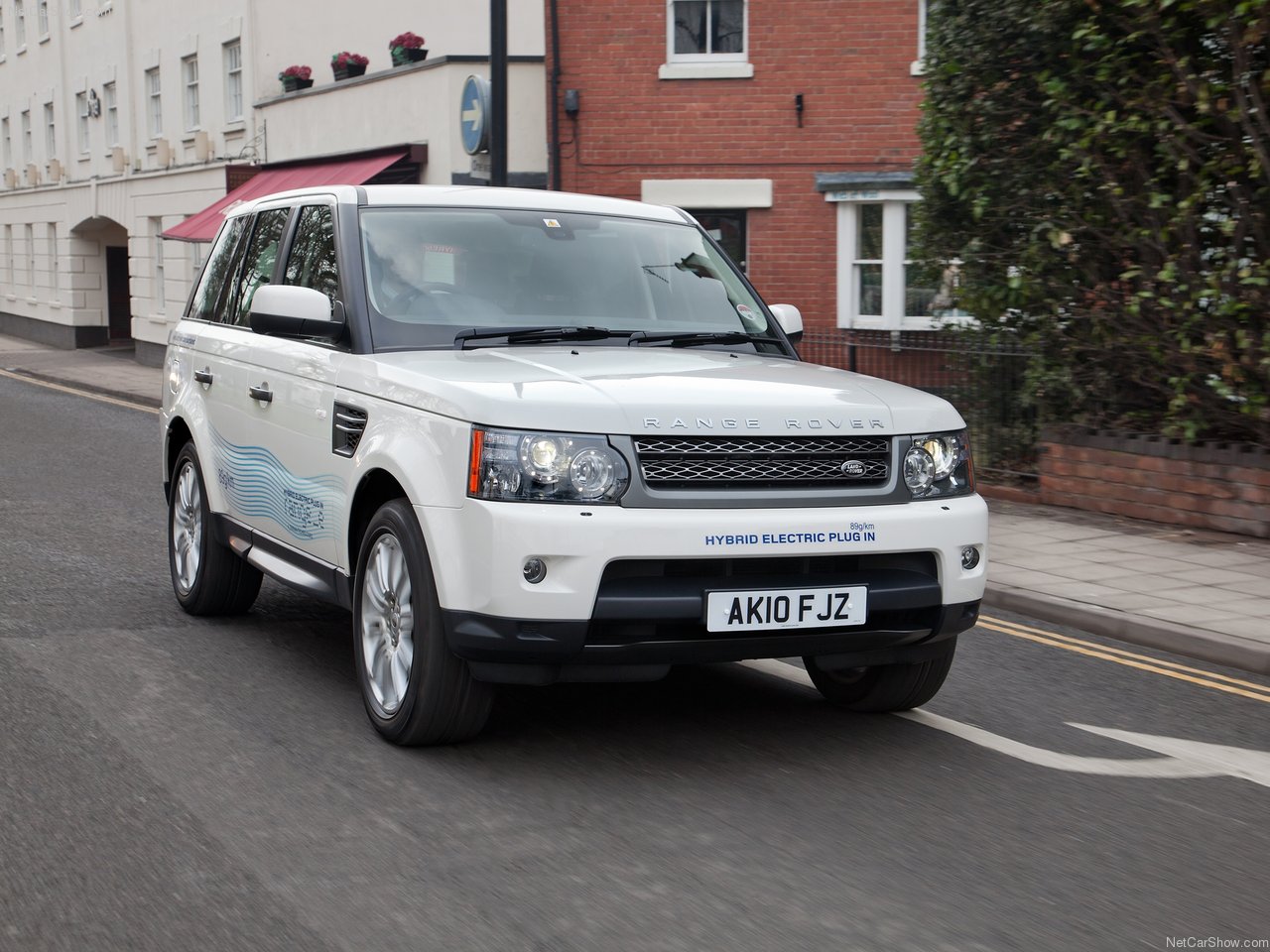
Land Rover's on-going commitment to building vehicles that are more fuel and emissions-efficient reaches another milestone at the 2011 Geneva Motor Show with the first presentation of Land Rover Range_e. This development model is equipped with an advanced plug-in hybrid diesel-electric powertrain that Land Rover expects to make available in future production models, following the scheduled launch of its diesel-electric hybrid in 2013.

Land Rover Range_e is based on the Range Rover Sport and uses the current 245PS 3.0-litre TDV6 diesel engine, working with an eight-speed ZF automatic transmission and a 69kW electric motor. Using a parallel hybrid system, with a 14.2kW/h lithium-ion battery that can be recharged from an external 240V power source, Land Rover Range_e can be driven on electric power alone for more than 20 miles, with zero harmful tailpipe emissions.

A full recharge from a standard domestic power supply can be accomplished in around four hours. Typically the majority of European car drivers cover less than 25 miles a day and therefore the EV range offered by this technology will support the majority of short urban journeys, where fuel economy and emissions are of prime concern. However, for longer journeys the diesel hybrid drivetrain will engage and continually optimise CO2 emissions.

Overall CO2 emissions are just 89g/km, yet Land Rover Range_e has a maximum system output of 339PS and a top speed of around 120mph, delivering a fuel economy of 85mpg. Improved fuel efficiency from the hybrid system makes 690 miles possible on a full tank of fuel.
Land Rover Range e Concept (2011)


Land Rover Range_e is also engineered with the same full 4WD capability as the standard Range Rover Sport, with high and low range in the transmission, front and rear differentials and a mechanical locking centre differential. Dependant on the driver demand, the car's intelligent system decides the most efficient method to deliver the power required, whether this is by electric, diesel or both. The Range_e also features regenerative braking to capture energy usually wasted in heat energy via the brakes. This energy can then be redeployed to drive the vehicle, further reducing fossil fuel consumption.

John Edwards, Land Rover Global Brand Director, said: "This system is the first example of a premium plug-in hybrid that also provides the full four-wheel-drive capability that you would expect from a Land Rover. It is an evolution of the production intent diesel-electric hybrid technology which will be launched in our next generation of SUVs and will be available for customers within the next two years."

Land Rover in Partnership with CABLED

The Land Rover Range_e is one of a number of Land Rover projects supported by the UK Government's Technology Strategy Board and five prototype models are currently engaged in a test programme with Land Rover's fellow members of the CABLED - Coventry and Birmingham Low Emissions Demonstrators - consortium. Land Rover anticipates its plug-in hybrid system will be brought to market in the near future, following on from the debut of its first standard diesel-electric hybrid models from 2013.

Pete Richings, Chief Engineer Hybrids, said: "We started the Range_e fleet trial in December 2010 and we have so far covered 12,000 miles on the trial between the five test vehicles. We are gathering invaluable real world data that will enable us to refine the technology ahead of introducing a production vehicle."

Land Rover continues to recognise the need to work on all aspects of our CO2 footprint such as reducing weight, reducing mechanical losses and increasing powertrain efficiency and our hybrid technology represents one part of the research and development journey.

Jaguar Land Rover is committed to spending £800 million on environmental technologies and has targeted a 25 per cent reduction in its fleet average CO2 emissions between 2008 and 2012.

2012 Land Rover Range Rover Autobiography Ultimate Edition


The new Land Rover Range Rover Autobiography Ultimate Edition, a hand-finished exclusive addition, will make its debut at the 2011 Geneva Motor Show.

The flagship model adds a handcrafted luxury interior, using specially selected soft feel natural leathers, to an interior renowned for being one of the finest in the automotive world.

The driver benefits from the recognisable command driving position offering excellent visibility and comfort, and the rear passengers now experience first-class-style accommodation never before seen in a Range Rover.

Two stand alone electric rear seats enhance space and comfort for the rear passengers, making the Land Rover Range Rover Autobiography Ultimate Edition the definitive chauffeur vehicle. The addition of a rear console extension, including a machined aluminium laptop table and drinks chiller, and two Apple iPads as standard (the first car to do so), takes the Range Rover rear seat experience to new levels of luxury.

The luxury theme extends to the rear load space, with a super yacht inspired teak floor with metal and leather detailing.

The interior story is completed with high-end semi-aniline leather seating and Oxford leather on the door casings, dashboard top and steering wheel. For the first time, Kalahari wood veneers are used on the facia and door top rolls and unique interior colourways of either dark cherry or Arabica are available.
Land Rover Range Rover Autobiography Ultimate Edition (2012)


Two new unique exterior colours, either Roussillon Red or Otago Stone, are available along with body coloured door handles, dark atlas radiator grille and side vents to create a sophisticated finish. This Ultimate Edition is fitted with new and unique 20" multi-spoke diamond-turned alloy wheels, and unique tailgate badging. Customers also have the option of an Exterior Design Pack and deployable side steps.

The all-V8 engine line-up includes the superb new 4.4 litre LR-TDV8 Diesel engine with a new eight-speed transmission incorporating Drive Select with Paddle Shift as standard. This LR-TDV8 combines superior power with 313PS, 700Nm torque whilst delivering even lower fuel consumption and 14% less CO2 emissions than its predecessor in line with the stringent EU5 emissions standards. The combined cycle fuel consumption of the new LR-TDV8 4.4-litre is just 30.1mpg, making this the first Range Rover ever to better 30mpg.

The 8-speed ZF automatic gearbox tuned by Land Rover engineers to combine silky smooth shifting with exceptionally rapid response and improved fuel economy, catapults the Range Rover from rest to 60mph in a mere 7.5 seconds and complete the 50mph-75mph dash in just 5.1 seconds.

The LR-V8 5.0 Supercharged engine is also available delivering awesome power and torque, 510PS and 625Nm, propelling the Range Rover from 0-60mph in a breath-taking 5.9 seconds.

Both variants come with Land Rover's award-winning Terrain Response system, which optimises the vehicle set-up for virtually all on-road or off-road driving situations, with five different settings to suit different terrains including new Hill Start Assist and Gradient Acceleration Control.

This Ultimate Edition was designed, engineered and manufactured in the UK and exclusivity is assured as each vehicle will be built to customer order only. 500 units will be produced and sold in over 20 markets globally.

2011 Land Rover Defender X-Tech


Land Rover launches the new 2011 Land Rover Defender X-Tech Limited Edition at the 2011 Brussels Motorshow.

The Land Rover Defender X-Tech offers raw and edgy style, with the class-leading all-terrain capability you would expect of this motoring icon.

The exterior is available in Zermatt Silver, enhanced by a contrasting Santorini Black finish to the roof and wheel arches. And, for the first time, this Defender is fitted with unique gloss black 16 inch Saw Tooth alloy wheels, to create a sense of raw utilitarianism.

The interior is available in Ebony and the seats offer the addition of leather side bolsters, for a more refined finish.

The Land Rover Defender X-Tech is available in the 90 Hard Top Commercial derivative, with the full range of accessories also available to enhance capability and individuality.

Powered by the 2.4 litre common-rail diesel engine, this Defender boasts fuel efficiency and performance with 360Nm torque for effortless towing and enhanced on-road performance.

The Land Rover Defender X-Tech Limited Edition will go on sale from March 2011 starting at £24,995.

2012 Land Rover Range Rover Evoque 5-door


The exciting 5-Door version of the all-new Land Rover Range Rover Evoque makes its global public debut at the 2010 Los Angeles Auto Show on November 17, 2010.

With its stylish and sporting appearance, enhanced by extra practicality and greater family appeal, the Land Rover Range Rover Evoque 5-Door joins the stunning coupé model to create a highly desirable line-up that will transform the premium compact SUV segment.

Like the coupé, the Land Rover Range Rover Evoque 5-Door remains faithful to the spirit of the groundbreaking Land Rover LRX concept car, offering an innovative new interpretation of the original cross-coupé design.

The Land Rover Range Rover Evoque 5-Door also stays true to the core values of the Range Rover brand, providing premium levels of craftsmanship, luxury, performance The Land Rover Range Rover Evoque 5-Door also stays true to the core values of the Range Rover brand, providing premium levels of craftsmanship, luxury, performance and renowned Land Rover all-terrain capability, but in a more compact package.

"The addition of the 5-Door to the Range Rover Evoque line-up extends the appeal of our brand still further," said Land Rover's Managing Director Phil Popham.

"While retaining everything that's great about the Range Rover Evoque coupé, this new 5-Door bodystyle will offer customers even more choice, greater practicality, versatility and flexibility. The launch of the Evoque in 2011 will expand and revitalise the global appeal of the Range Rover marque."
Land Rover Range Rover Evoque 5-door (2012)


Commitment to sustainability

With the same compact footprint and advanced technologies as the coupé model, the Land Rover Range Rover Evoque 5-Door reinforces Land Rover's commitment to environmental sustainability. The Evoque is positioned as the smallest, lightest, most fuel-efficient Range Rover ever.

To deliver optimum efficiency, the Land Rover Range Rover Evoque 5-Door features lightweight construction techniques and offers the choice of a front-wheel drive variant. A new range of state-of-the-art petrol and diesel engines comes with direct injection and stop-start. The Range Rover Evoque also adopts low CO2 systems such as Electric Power-Assisted Steering (EPAS) and is built to maximise end of life recyclability.

"Enhanced sustainability has been at the centre of the design and development of the Range Rover Evoque," said Phil Popham. "We are offering customers the choice of high-efficiency coupé or 5-Door bodystyles, and both models are highly relevant, very contemporary and extremely desirable."

Coupé style and 5-Door versatility

The Land Rover Range Rover Evoque 5-Door offers an exciting new interpretation of the LRX concept car design, combining the dramatic stance and dynamic appeal of the original cross-coupé with the enhanced functionality offered by a 5-Door format.

"The 5-Door Range Rover Evoque has the same strong emotional appeal as the coupé, while offering the superior versatility of a family vehicle," said Land Rover Design Director, Gerry McGovern.

"The key lines remain intact - the dramatic rising beltline, muscular shoulder running the length of the car, and the distinctive taper to the floating roofline - but with a slightly higher rear roof. The finished vehicle offers impressive levels of space and versatility whilst retaining the overall essence, visual robustness and jewel-like detailing of the coupé."

The more capacious interior of the Land Rover Range Rover Evoque 5-Door has not been achieved by enlarging the compact footprint of the coupé model: the overall length and width remain identical.

Like the coupé, smart design, meticulous engineering and clever packaging has ensured that the Evoque 5-Door delivers the core Range Rover values of luxury, refined performance and all-terrain capability while remaining true to the spirit of the LRX concept design.

Interior quality and versatility

The cabin of the Range Rover Evoque is lavishly appointed with premium quality materials and an elegance befitting of a Range Rover interior.

Customers can specify soft, premium leather and beautifully tailored, twin-needle stitching providing a luxurious finish to almost every surface of the instrument panel, doors and seats.

Measuring 30mm taller than the coupé model, the Land Rover Range Rover Evoque 5-Door adds further space and versatility to the luxurious cabin. Rear seat passengers benefit from over 50mm more shoulder room, along with generous headroom which compares very favourably to traditional sporting saloons.

A full-sized glass panoramic roof enhances the sensation of space and comfort by flooding the interior with natural light, and offers even greater headroom for all occupants.

For growing families, the Land Rover Range Rover Evoque 5-Door provides the versatility and luggage space of a compact station wagon.

The rear seats, with seat belts and head restraints for three passengers, have 60/40 folding seat squabs and are equipped with ISOFIX child seat mounts. When required, luggage capacity can be expanded to a substantial 1445 litres.

Sporting dynamics

On the open road, the Land Rover Range Rover Evoque 5-Door offers a polished driving experience that combines dynamic and sporty handling with responsive, effortless performance and refinement.

"The 5-Door Range Rover Evoque has the same sporting character as the coupé," said Murray Dietsch, Director of Land Rover Programmes. "We have focused on ensuring that the car is agile and fun to drive, so that customers have a rewarding experience, even in day-to-day urban driving. Advanced technologies such as MagneRide™ mean we can ensure that this dynamic prowess does not come at the cost of top-quality refinement or comfort."

The optional Adaptive Dynamics system with advanced MagneRide™ dampers provides an exceptional balance between a supple, controlled ride and sharper handling responses.

Capable off-road

Drivers who take their Range Rover Evoque off-road will be reassured to know that, in addition to extremely generous ground clearance, the car has better breakover and departure angles than other compact SUVs.

The Evoque will be the first Range Rover to offer customers a choice between a full-time four-wheel-drive system, which delivers outstanding performance and traction on all surfaces, and a low carbon, front-wheel-drive option for further enhanced fuel economy.

The Range Rover Evoque's formidable all-terrain potential is enhanced by the latest version of the company's signature Terrain ResponseTM system.

Powertrains

The Land Rover Range Rover Evoque 5-Door shares its turbocharged powertrain line-up with the Coupé model. The state-of-the-art diesel and petrol engines offer smooth and responsive performance, blending four-cylinder efficiency with six-cylinder refinement and power.

Customers can choose between two comprehensively updated 2.2-litre turbodiesel derivatives, with 190PS or 150PS.

In the 5-Door model, the front-wheel drive Range Rover Evoque with the 150PS 2.2-litre engine achieves sub 135g/km CO2.

A new 240PS, 2.0-litre Si4 petrol engine combines direct fuel injection, turbocharging A new 240PS, 2.0-litre Si4 petrol engine combines direct fuel injection, turbocharging and twin variable valve timing for exceptional driveability and fuel efficiency.

Murray Dietsch, Director of Land Rover Programmes, said: "We have combined state-of-the-art powertrains with a lightweight bodyshell and a range of low-carbon technologies to deliver fuel efficiency which is outstanding for a premium SUV."

Innovation

Like the coupé model, the Evoque 5-Door benefits from the same high-end innovative technologies as the larger Range Rovers. An intuitive control system and touch-screen display combines a stylish, uncluttered layout, state-of-the-art functionality with class-leading ease of use.

The display is available with dual-view technology, so that driver and passenger can view independent content.

Connectivity options include Bluetooth hands-free mobile phone and audio streaming, Connectivity options include Bluetooth hands-free mobile phone and audio streaming, plus a range of USB and auxiliary inputs for iPods and other portable devices.

The Evoque is the first Range Rover to offer breathtaking new sound systems developed in partnership with the high-end audio specialist Meridian. The premium Meridian offering is an 825W, 17-speaker system that delivers the ultimate in surround-sound performance.

Other features available to Range Rover Evoque customers include:
Park Assist for automated parallel parking
Blind Spot Monitoring system
Surround Camera System with five digital cameras, including a reversing system
Full dual-zone automatic climate control, featuring a Park Heater timer facility
Hard drive navigation system
DAB/FM/AM/Sirius tuners, with hard drive virtual 10xCD multiplayer
Digital and Satellite TV, and DVD playback
Rear seat entertainment package, with 8-inch video screens, digital wireless headphones and touch screen remote control
Keyless entry system and powered tailgate
Adaptive headlamps with Automatic High Beam Assist
Heated windscreen, front seats and steering wheel

Three design themes

The Land Rover Range Rover Evoque 5-Door follows the coupé model by offering customers the choice of three main vehicle design themes, each with its own distinctive character, exterior treatment and carefully co-ordinated interior package.

'Pure'combines the stunning concept-car exterior with a stylish, clean interior in neutral colours. Soft-touch wrapped materials on the major surfaces contrast with the metal brushed aluminium trim.

'Prestige' is theultimate in Range Rover luxury, combining a bespoke exterior that includes unique, 19-inch wheels and sparkling metallic details with an interior that is almost entirely leather-wrapped.

'Dynamic' brings a bolder exterior with 20-inch wheels and unique bumpers, sills, grille and tailpipes for a more assertive, confident stance. Contrasting roof and spoiler colours are available, while the premium sports interior offers sports seats with splashes of bright contrast colour.

Both coupé and 5-Door models of the Range Rover Evoque will be manufactured at Land Rover's multi award-winning Halewood plant in Merseyside, UK. The car will go on sale in more than 160 markets worldwide from summer 2011. Prices will start from £30,000 / 35,000 EUR.